Friday, January 22, 2016

New Logo for Pioneer Memorial Library

Can I share with you something that I am personally excited about accomplishing? This new year the public will begin seeing a logo on our website, Facebook pages and in other ways.  The Pioneer Memorial Library has never had a logo before and we have been working on creating one that went with the motto for the library, “Bringing Words to Life!” It took a bit of work.  We wanted something simple and bright with the ability to be used in many ways.  If you look at our logo, you may ask why the stacked squares? The squares present a feeling of rising up from the words, so that life or energy is coming forth from the words. Squares also look a bit like books without being fussy. Stacked squares also look a bit like library shelves (or stacks as librarians call them). If you go into the library, on our themed wall you find squares that we have used with our motto. The colors go with the art work and colors inside the library that we currently enjoy, as well.

            We believe our motto has a fun way expressing the mission of Pioneer Memorial Library. Our mission statement states that, "We provide a broad coverage of and access to modern library resources, services, and programs in a variety of formats to meet the recreational, informational, and educational needs of community residents of all ages." We think that our motto aligns with our mission statement. “Bringing Words to Life!” highlights our primary objective which is to encourage the many ways ideas, knowledge, creativity and expressions are brought through differing mediums of materials: be they printed books, audio books, eBook, magazines, movies, music, art, technology such as databases that provide journals and magazines, video games, Internet access or creating new documents from scratch. It is also brought through programming provided by the library, through others or just through various meetings, personal conversations and encounters at the library. Our community member’s lives are enriched by all these expressions and more. 

Friday, December 4, 2015

Preparing for Christmas!

Let me review a few books. The first one I read read in preparation for the library's book club, “A Carol Dickens Christmas,” by Thomas Fox Averill. It is a 2014 Kansas Notable Book. The novel is set in Topeka, Kansas. In this book, protagonist, Fin is a high school student in his senior year.  He is soooo ready to be gone and in college.  This is until he happens upon a previous band member from high school.  Fin is a talented trumpet player.  He sees her on her steps, she pregnant and not looking very happy.  He decides that he is going to seek her out.  He  does, and get involved with her whole family. This changes his life. And just about upturns his mothers life, who prefers the predictable, honored traditions of celebrating Christmas using "A Christmas Carol, by Charles Dickens. These traditions will collide with the events and plans that Finn has made.  It is an enjoyable and thoughtful story. 
A book I have read in preparation for Christmas “The 13th Gift: A True Story of Christmas Miracles,” by Joanne Huist Smith. This is about a family who's father has died.  It devastates the three youth and mother.  This is the first Christmas, they do not want to face it.  They'd rather ignore it, but others have a better idea.  Bless it, enlarge it and embrace it!
Another new item for Christmas is “The Mistletoe Inn,” by Richard Paul Evans.  The Mistletoe Inn,” by Richard Paul Evans.  This is book two of the Mistletoe series.  They are not a trilogy but “independent love stories abounding with inspiration, humor and romance – Christmas presents for my readers” (p. ix). The review on the front flap sounds rosy. But this story brings protagonist Kimberly Rossi through the death of her mother, a move to a new town, and the betrayal of her husband. After that, Rossi moved to Thornton, a suburb of Denver where the story really begins. I bet you will enjoy once again this author’s story.
The next book is “Christmas Bells,” by Jennifer Chiaverini. The author bases this novel from the poem entitled, “Christmas Bells,” by Henry Wadsworth Longfellow. Protagonist, Sophia Peleg has organized a wonderful Winter Holiday Concert at Peleg Wadsworth Elementary School.  Called into the principal’s office after the program, she was congratulated for an excellent concert, . . . the best yet. . .” (p. 4). Even with the excellent work, she finds out due to a ballot measure failing and emergency financial measures being instituted, she will be laid off at the end of the school year. Her principal wants her to begin looking for a new teaching or musical employment position for her future. Sophia is also a volunteer at her local church.  She works with the children in their musical presentations. As she delves into the selections and themes for the Christmas concert for the church, she selects a poem written by Henry Wadsworth Longfellow.  It is a glorious poem that speaks of loss, tragedy, while good will and peace triumph.  This book tells the story of how Longfellow came to write the poem.  It weaves Sophia’s life and experience in the midst of telling the story.  You will enjoy this book.
Other books you might want to look to read are: “Marry Me At Christmas,” by Susan Mallery (regular and large print); “Falling Like Snowflakes,” by Denis Hunter (large print); “The Last Chance Christmas Ball,” by Mary Jo Putney & Jo Beverly; “Winter Stroll,” by Elin Hilderbrand; “Dashing Through the Snow,” by Debbie Macomber; “A Christmas Bride in Pinecraft,” by Shelley Shepard Gray; “Amish Christmas at North Star,” by Cindy Woodsmall & Mindy Starns Clark; “Heartsong Cottage,” by Emily March; “Christmas on Candy Cane Lane,” by Sheila Roberts; “Away In A Manger,” by Rhys Bowen; and “A Cherry Cola Christmas,” by Ashton Lee; “Duck the Halls,” by Donna Andrews; “A Log Cabin Christmas Collection,” by Wanda E. Brunstetter; “Christmas of Twilight,” by Lori Wilde; “Celebrate Christmas,” by Susan Wiggs; “An Island Christmas,” by Nancy Thayer; “The Christmas Light,” by Donna Vanliere; “The Lodge on Holly Road,” by Sheila Roberts; and “A Quilt for Christmas,” by Sandra Dallas. 

Friday, November 13, 2015

Read Malcom Gladwell's non-fiction books. Learn about yourself & others!

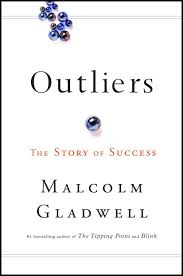
The first book I read by this author was “Outliers: The Story of Success." This was an intriguing book that described how successful people like Bill Gates, the Beetles and others became truly great at what they do.  Essentially, Gladwell demonstrates through stories that it is the practices and time spent in their lives and background.  It is the environment and opportunities they have used to propel their excellence.  But, it is also the hard work and self-determination that makes them great.  Gladwell shares with us that these people practiced over 10,000 times.  Practice really does make perfect, but then we'd have to change the saying, practice makes successful! 
The second book I read from this individual was "Blink:  The Power of Thinking without Thinking." This book describes how we make decisions and how often times it is the gut, fast decisions that are more right than the slower methodical decisions.  His discussion is good, and valid in some instances, but I don't think I will begin to make decisions by shooting from the hip anytime soon!
I've also read “David &Goliath: Underdogs, Misfits, and the Art of Battling Giants,” by Malcolm Gladwell.  This book discusses how the story of David and Goliath is often realized in our lives when we face obstacles. Gladwell demonstrates that might often is defeated because the greater loses the perspective for themselves, as well as the legitimacy in others eyes to conquer the opposing force. The author discusses this concept when challenging educational beliefs that smaller class size is better or the ivory league will be the best for a student. These are not always confirmed in our lives.  He covers the struggle between criminals, crime, jail and the justice system.  Even girls basketball teaches us lessons.  Gladwell discussed the civil rights movement, Dr. Martin Luther King and his various associates. He presented us the history about a lone doctor slogging through the deaths of almost 99% of deaths in children a few decades ago, when we came face to face with leukemia.  This doctor through his efforts persisted until chemotherapy was born.
Considering recent events, I wonder what this author would have to say about our current election cycle?
I've enjoyed and gleaned some great insights from all three books.  I recommend them highly.  Just wish Gladwell would write something new!

Friday, October 9, 2015

North Korea continues to draw attention internationally!

          Korea continues to draw attention.  It brings me to discuss the book "Orphan Master's Son," by Adam Johnson.  It is a fiction piece, however, Johnson has used details from personal testimonies, eyewitness accounts and source documents that have described hunger, lack, confiscation, escape from concentration camps, betrayals and deaths within North Korea by their leaders. This is a riveting piece that outlines how the citizens of this country really are just property to be used and disposed of by the great leader.
          Pak Jun Do is the son of the Orphan Master.  He makes it through circumstances that most of us would never dream of encountering. In the end he even bests the great leader.  This gives me hope that one day the people of this land will be set free to live without tyranny.
          If you want to find out about some of the sources used for this novel visit websites like litlovers.com, and the many newspaper reviews.  Amazon. com also has a very long article with pictures explaining the interaction between truth, testimonies and fiction.

          In closing this blog piece, all I can say is read this book; it will give you compassion to want freedom for the people of North Korea.

Thursday, September 10, 2015

Three historical fiction" items challenge us to consider our choices

I have been reading the book,  “All the Light We Cannot See,” by Anthony Doerr for the Pioneer Memorial Library, book club. This is a 2015 Pulitzer award winning book written about World War II as a historical fiction genre.  Protagonist, Marie-Laure LeBlanc cannot sleep in her home at Number 4 rue Vauborel. She lives with her great uncle who has not returned home in over 24 hours.  She worries about him but must stay home and wait.  In the middle of the night she is caressing the miniature model of the city in her bedroom. She hears the roar of planes overhead. She makes her way to the window and gently pushes it up so that she might hear what else is happening.  In the midst of this, a piece of paper sits gingerly on the windowsill. She picks it up, feels and sniffs it.  It is smells of fresh ink, is crisp and new.  What it says she does not know. She is blind.  Now the author introduces us to a second character, young private named Werner Pfennig. He is in the German Army serving in France.  He is eighteen years old and is on his way to the cellar of the L’hotel de Abeilles (Hotel of Bees). The ground is shaking, the plane engines are roaring overhead. D-Day was two months ago.  But their little island had not been liberated by the Americans or English.  Cherbourg, the town is about to experience the crushing blow of the Allies against the Germans.  Those within this French town just received thousands of leaflets telling them to leave the city, go to the open fields and wait out the attack.  Marie does not know this. She must just wait. As Werner is moving quickly to the cellar he thinks this may be it for him; his day of meeting his maker.  Doerr gets his reader right where he wants them, then he back tracks 10 years.  He tells of their childhood in several chapters, then springs us back to 1944 in part two.  This book reads at a good pace. The dialogue is easy but engaging.  I think we will find this a thought provoking and interesting book to read.  Join me in finishing the story.
The next novel is also a historical fiction item: “The Nightingale,” by Kristin Hannah. The book starts with an elderly woman living through old age, cancer and now the necessity of moving into a smaller home and away from her beloved house called the Peak.  She was a young woman during WWII, when the Nazi’s invaded France.  She and her sister take different paths during the struggle against Nazi oppression.  Their lives will be changed dramatically. Both will fight this enemy in ways they never thought possible.  The Gestapo are looking for the Nightingale, and the search is being broadened until it comes to one of the sisters. She is in danger, but cannot tell those in the resistance, they have their own problems. She must find a way around the suspicions and death threats. This book will keep you captivated. I actually liked it better than the one above.
A third item from World War II and France is “Sarah’s Key,” written by Tatiana DeRosnay.  This is a profoundly important book to read or listen to. The author creates an historical fiction piece that is so clearly close to the real happenings of original setting that it is excruciatingly painful to consider. This story is about a Jewish family that becomes part of the now infamous Vel’ d’Hiv roundup which occurred on July 16th and 17th in 1942. The roundup was perpetrated in collusion between the Nazi’s and the French National Police. In this story, Sarah’s family is taken by force to the national bicycle velodrome called the VĂ©lodrome d'Hiver. From there they are taken to Auschwitz. Sarah’s story is captivating and challenging. 
I hope like me, these novels will make you reflect just what you would allow to go on to a group of people in your town, county, state or nation. It will also make you consider your heritage, just who do we think we are and how did we get where we are, and what have we lost in our heritage from the past.  
  

Thursday, August 13, 2015

"Gone to Green," by Judy Christie

         
 Do you want to read an enjoyable, light but captivating book? Then read the book entitled, “Got to Green,” by Judy Christie.  This is book one of the “Green Series. No, it is not about going green.  It is about a young woman who inherits a newspaper in a small town.  Protagonist, Lois Barker moves from a larger Midwestern town, Dayton, Ohio to a small rural area in Northern Louisiana. Barker is used to the fast life as the city editor section of the Dayton Post.  She is use to working nights and weekends, and most holidays.  As someone without children she is chosen to the work the newspapers editors desk during holidays and other difficult times. While feels she has begun to tire of such treatment. Ed, her best friend and mentor takes her aside and tells her he is leaving the Dayton Post.  He has purchased a paper and will leaving within two months.  She is devastated.  While they have never been romantically involved, their friendship has been very important to both of them.  Her boss asks Barker to take the managing editor’s position that Ed has left.  She knows that this will bring her even more challenges, however, she says yes. Barker goes home to consider all the changes that have come to her so swiftly, but it is not until the next morning when she meets with Attorney Owens that her life really begins to spin out of control. She has been given a great gift but wonders if she can handle it.  What is the answer? Read and find out!
The book was so easy to read, I decided to read all three in the series. 
        
         Book 2: "Goodness Gracious Green,"
                                             Book 3: "The Glory of Green"

Thursday, July 9, 2015

Continuum vs. Axis


While I was in South Dakota, both in the capital city and the Black Hills area, these last two weeks, it reminded me once again how important our relationships are and our history is when we look to our current environments. During that time I heard about the land mark Supreme Court decisions. I have reflected on the fact that we often get to certain situations over time.  Agree or disagree with rulings by our court system, we have to remember we have been moving on a continuum. Merriam-Webster tells us that a continuum is “a range or series of things that are slightly different from each other and that exist between two different possibilities.” This is kind of what was happening with the decisions by states regarding marriage and the Affordable Care Act.  There were two disparate beliefs about what should be allowed for the laws regarding marriage.  There was also legal maneuvering in states and among our federally constituted elected officials regarding the Affordable Care Act.
So for the last number of years, court cases have been climbing through the court system until two cases changed the very axis of law, and rights were changed.  You may ask why I use the definition “axis.” Merriam-Webster gives us several definitions.  Several fit here: “a straight line about which a body or a geometric figure rotates or may be supposed to rotate. . . . 5:  a main line of direction, motion, growth, or extension 6 a :  an implied line in painting or sculpture through a composition to which elements in the composition are referred b :  a line actually drawn and used as the basis of measurements in an architectural or other working drawing.” I think that Dictionary.com gives us another concise definition: noun, plural axes. . . 1. The line about which a line about which a rotating body, such as the earth, turns.” This informs me that that legally speaking, we have moved from a continuum of possibilities to an axis by which all states and legal decisions will be predicated upon.

There have always been historical decisions like this in our history as a nation.  The very first was made at the Continental Congress when the people and representatives sent men to discuss separating from England.  From that time, we argued and disagreed upon many subjects until the Declaration of Independence was ratified by the 13 colonies. I know you will say, yes but that they were our representatives making the decisions, not the court.  But, these same people made up our nations framework and its structure for a reason. We often find ourselves unwilling to acknowledge two juxtapositions. We honor our nation’s leaders for creating a republic that included 3 branches of government, while currently thinking that our current branches of government are failing us.  I do not see things as gloomy.  We are a free people who have the rights to live and participate in our government.  We can and do make a difference in others people’s lives through personal and governmental means.   People are still flocking to our nation to live! When we have to begin begging or paying others to come, live and work here, I will know this is the end of a great nation.  Until then, I will continue to work and strive to serve the people within our society no matter what.