Friday, March 11, 2016

Mental health and recently published books

       In this blog piece, I want to talk about some mental health resources:  a biography, and three non-fiction materials. Individuals and family members bring discussions about their victories and struggles in life.
The first is a biography entitled “Rosemary: The Hidden Kennedy Daughter,” by Kate Clifford Larson. It outlines the life of Rosemary Kennedy, the first child of Joseph and Rose Kennedy, parents to former President, John F. Kennedy. It was Joseph’s Kennedy’s dream and plans to have one of his sons become president.  When his oldest son, Joseph Patrick Kennedy died in World War II, the responsibility came to John. The book tells us when Rosemary was born, the nurses told Rose to hold her legs together until the doctor arrived. This probably caused brain damage due to the lack of oxygen. Hence, Rosemary was considered slow.  The book demonstrated that she could hold a conversation at some level.  Though her writing was simple and not grammatically correct she did get her point across.  Larson also shows that Joe and Rose Kennedy worked diligently to get their oldest daughter to function at a level acceptable within society.  They sent her to private schools, gave her tutors.  As I’ve read the book, it seems that Rosemary’s parents were obsessed with marking sure she gave no shame to the family. As she grew into adulthood, Rosemary became more rebellious and hard to handle. Doctors suggested to Joseph Kennedy that an experimental brain lobotomy would cure Rosemary (p. 159). Though it has long been told that Rose knew nothing about the procedure, Larson explains that Kathleen, their third child investigated the medical procedure.  She told her mother that this was not a procedure for them to have done on Rosemary.  Her mother agreed after learning what her daughter told her.  Kathleen said, that John White, a reported found through investigation that the cutting away tissue from the frontal lobes may relieve violent rages and psychological and physical pain, however “the results were ‘just not good’; he had seen for himself that after the surgery patients ‘don’t worry so much, but they’re gone as a person, just gone’” (p. 161). In 1941 her father authorized the procedure.  Larson states that if Rose gave her opinion about the procedure, Joseph did not listen; he authorized the lobotomy (p. 161).  This procedure left Rosemary with some handicaps and the mental capacity of a 2 year old. The parents hid Rosemary away, made excuses until after the election of their son to the Presidency.  They then said that she was mentally retarded, leaving out the truth.  After Rosemary’s father died in 1969 she began to be allowed to visit the family home. This tragic and unnecessary situation changed the way her brothers and sisters responded. It is credited with influencing Eunice to form the Special Olympics. I was quite horrified by the actions of parents. I am thankful that today we have parents and relatives of children who are working hard to help our children succeed and function in society at the level they are able. This is not an easy task. It takes hours, years and a life time of committed love! 
       Another book we are adding is written by a success story for a child with 
mental health or functioning challenges. Dr. Temple Grandin’s mother worked tirelessly to help Temple function with severe autism.  She fought for her and our lives have been changed by her victories! Temple has written a book, “The Way I See It: A Personal Look at Autism & Asperger’s.” This book outlines early detection, educational issues, sensory, nonverbal and behavior issues, social functioning, medical and bio-medical considerations, cognition and brain research, as well as adult and employment discussion. 
It looks to be easy to read, and informative. 
       The next book is “My Autistic Awakening: Unlocking the Potential for a Life Well Lived,” by Rachael Lee Harris.  It’s about Harris’ personal journey inside of autism.  She was “diagnosed with Asperger’s syndrome, a type of high functioning autism” (p. xiii). She is another success story.  It did not come easy for her or her family.  Today, Rachael is a psychotherapist specializing. . .  in the autism spectrum (front flap).

     
The last is “In A Different Key: The Story of Autism,” by John Donvan
and Caren Zucker. This book is committed to telling the historical
timeline of the recognition of autism beginning in the 1930’s until today.
If you have a passion for this subject, you will want to consider how
far we have come and then where we are and may be in a few years!

Friday, February 5, 2016

New literature on Presidents and their administrations.

By the time you read this article, the President’s day holiday will have past.  However, this theme gives me the opportunity to share with you some interesting books that have been published recently. 
The first one that caught my eye was: “9 Presidents Who Screwed Up America: And Four Who Tried to Save Her,” by Brion McClanahan.  When I saw that title, I immediately asked, by whose perspective? What is the authors leaning and biases, how did he choose the nine he did.  As you read, you may be able to pick this out. If you want to know, look him up on the Internet.  I will not tell you who he writes about, because this might keep you from picking it up, and reading it.  You may not agree with everything he writes, but I find it important to consider the arguments and make my own conclusions on the basis of the information gleaned and other knowledge I bring to a discussion.  McClanahan provides notes for each chapter about the president he is writing about.  He also provides a bibliography and index. 
The next item is “Dead Presidents: An American Adventure Into the Strange Deaths and Surprising Afterlives of Our Nation’s Leaders,” by Brady Carlson. The author confesses to us that he came to this subject about dead presidents while visiting a monument at Oak Ridge in Springfield.  For years he was taken with the marble sarcophagus for President Lincoln.  Growing up he thought everyone visited to be inspired.  He found out that many came to be tourists not be inspired by these sites.  One time he visited this site he learned that Lincoln was not buried in the sarcophagus, but was ten to twelve feet below.  This began his search to find out “how we, the ages, choose to remember and memorialize our dead presidents. . . (p. 5). ” Carlson tells us that it is not the most famous, but the “obscure or mediocre presidents, “that give us really interesting stories of their circumstances in death” (p. 7). The author shares that this book starts “where most stories about the presidents leave off” (ibid.).
Another book you may not have seen is “1944: FDR and the Year That Changed History,” by Jay Winik.  This book is about how there were so many challenges and war front issues in 1944 that Roosevelt faced.  The front flap asks a few questions: “Was winning the war  the best way to rescue the Jews? Was a rescue even possible? Or would it get in the way of defeating Hitler? Then at the end of the book Winik states that we are still asking these basic questions with the atrocities we see around the world. He quotes Abraham Lincoln as stating, “We must think anew, and act anew . . . . Fellow citizens, we cannot escape history. We – even we here – hold the power, and bear the responsibility” (p. 536). Then he asks two questions in the last paragraph: “When will the Allies come? When will the Americans come?” (ibid.).
Other great books about presidents include: The Golden Lad: The Haunting Story of Quentin and Theodore Roosevelt,” by Eric Burns; “Eisenhower: A Life,” by Paul Johnson; “Jimmy Carter: A Full Life – Reflections at Ninety,” by Jimmy Carter; Reagan: The Life,” by H.W. Brands; “Lady Bird and Lyndon,” by Betty Boyd Caroli; “The Quartet: Orchestrating the Second American Revolution, 1783-1789,” by Joseph Ellis; “The Man Who Would Not Be Washington: Robert E. Lee’s Civil War and His Decision that Changed American History,” by Jonathan Horn. 

Friday, January 22, 2016

New Logo for Pioneer Memorial Library

Can I share with you something that I am personally excited about accomplishing? This new year the public will begin seeing a logo on our website, Facebook pages and in other ways.  The Pioneer Memorial Library has never had a logo before and we have been working on creating one that went with the motto for the library, “Bringing Words to Life!” It took a bit of work.  We wanted something simple and bright with the ability to be used in many ways.  If you look at our logo, you may ask why the stacked squares? The squares present a feeling of rising up from the words, so that life or energy is coming forth from the words. Squares also look a bit like books without being fussy. Stacked squares also look a bit like library shelves (or stacks as librarians call them). If you go into the library, on our themed wall you find squares that we have used with our motto. The colors go with the art work and colors inside the library that we currently enjoy, as well.

            We believe our motto has a fun way expressing the mission of Pioneer Memorial Library. Our mission statement states that, "We provide a broad coverage of and access to modern library resources, services, and programs in a variety of formats to meet the recreational, informational, and educational needs of community residents of all ages." We think that our motto aligns with our mission statement. “Bringing Words to Life!” highlights our primary objective which is to encourage the many ways ideas, knowledge, creativity and expressions are brought through differing mediums of materials: be they printed books, audio books, eBook, magazines, movies, music, art, technology such as databases that provide journals and magazines, video games, Internet access or creating new documents from scratch. It is also brought through programming provided by the library, through others or just through various meetings, personal conversations and encounters at the library. Our community member’s lives are enriched by all these expressions and more. 

Friday, December 4, 2015

Preparing for Christmas!

Let me review a few books. The first one I read read in preparation for the library's book club, “A Carol Dickens Christmas,” by Thomas Fox Averill. It is a 2014 Kansas Notable Book. The novel is set in Topeka, Kansas. In this book, protagonist, Fin is a high school student in his senior year.  He is soooo ready to be gone and in college.  This is until he happens upon a previous band member from high school.  Fin is a talented trumpet player.  He sees her on her steps, she pregnant and not looking very happy.  He decides that he is going to seek her out.  He  does, and get involved with her whole family. This changes his life. And just about upturns his mothers life, who prefers the predictable, honored traditions of celebrating Christmas using "A Christmas Carol, by Charles Dickens. These traditions will collide with the events and plans that Finn has made.  It is an enjoyable and thoughtful story. 
A book I have read in preparation for Christmas “The 13th Gift: A True Story of Christmas Miracles,” by Joanne Huist Smith. This is about a family who's father has died.  It devastates the three youth and mother.  This is the first Christmas, they do not want to face it.  They'd rather ignore it, but others have a better idea.  Bless it, enlarge it and embrace it!
Another new item for Christmas is “The Mistletoe Inn,” by Richard Paul Evans.  The Mistletoe Inn,” by Richard Paul Evans.  This is book two of the Mistletoe series.  They are not a trilogy but “independent love stories abounding with inspiration, humor and romance – Christmas presents for my readers” (p. ix). The review on the front flap sounds rosy. But this story brings protagonist Kimberly Rossi through the death of her mother, a move to a new town, and the betrayal of her husband. After that, Rossi moved to Thornton, a suburb of Denver where the story really begins. I bet you will enjoy once again this author’s story.
The next book is “Christmas Bells,” by Jennifer Chiaverini. The author bases this novel from the poem entitled, “Christmas Bells,” by Henry Wadsworth Longfellow. Protagonist, Sophia Peleg has organized a wonderful Winter Holiday Concert at Peleg Wadsworth Elementary School.  Called into the principal’s office after the program, she was congratulated for an excellent concert, . . . the best yet. . .” (p. 4). Even with the excellent work, she finds out due to a ballot measure failing and emergency financial measures being instituted, she will be laid off at the end of the school year. Her principal wants her to begin looking for a new teaching or musical employment position for her future. Sophia is also a volunteer at her local church.  She works with the children in their musical presentations. As she delves into the selections and themes for the Christmas concert for the church, she selects a poem written by Henry Wadsworth Longfellow.  It is a glorious poem that speaks of loss, tragedy, while good will and peace triumph.  This book tells the story of how Longfellow came to write the poem.  It weaves Sophia’s life and experience in the midst of telling the story.  You will enjoy this book.
Other books you might want to look to read are: “Marry Me At Christmas,” by Susan Mallery (regular and large print); “Falling Like Snowflakes,” by Denis Hunter (large print); “The Last Chance Christmas Ball,” by Mary Jo Putney & Jo Beverly; “Winter Stroll,” by Elin Hilderbrand; “Dashing Through the Snow,” by Debbie Macomber; “A Christmas Bride in Pinecraft,” by Shelley Shepard Gray; “Amish Christmas at North Star,” by Cindy Woodsmall & Mindy Starns Clark; “Heartsong Cottage,” by Emily March; “Christmas on Candy Cane Lane,” by Sheila Roberts; “Away In A Manger,” by Rhys Bowen; and “A Cherry Cola Christmas,” by Ashton Lee; “Duck the Halls,” by Donna Andrews; “A Log Cabin Christmas Collection,” by Wanda E. Brunstetter; “Christmas of Twilight,” by Lori Wilde; “Celebrate Christmas,” by Susan Wiggs; “An Island Christmas,” by Nancy Thayer; “The Christmas Light,” by Donna Vanliere; “The Lodge on Holly Road,” by Sheila Roberts; and “A Quilt for Christmas,” by Sandra Dallas. 

Friday, November 13, 2015

Read Malcom Gladwell's non-fiction books. Learn about yourself & others!

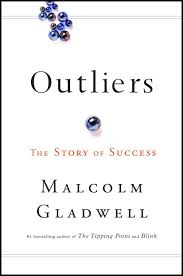
The first book I read by this author was “Outliers: The Story of Success." This was an intriguing book that described how successful people like Bill Gates, the Beetles and others became truly great at what they do.  Essentially, Gladwell demonstrates through stories that it is the practices and time spent in their lives and background.  It is the environment and opportunities they have used to propel their excellence.  But, it is also the hard work and self-determination that makes them great.  Gladwell shares with us that these people practiced over 10,000 times.  Practice really does make perfect, but then we'd have to change the saying, practice makes successful! 
The second book I read from this individual was "Blink:  The Power of Thinking without Thinking." This book describes how we make decisions and how often times it is the gut, fast decisions that are more right than the slower methodical decisions.  His discussion is good, and valid in some instances, but I don't think I will begin to make decisions by shooting from the hip anytime soon!
I've also read “David &Goliath: Underdogs, Misfits, and the Art of Battling Giants,” by Malcolm Gladwell.  This book discusses how the story of David and Goliath is often realized in our lives when we face obstacles. Gladwell demonstrates that might often is defeated because the greater loses the perspective for themselves, as well as the legitimacy in others eyes to conquer the opposing force. The author discusses this concept when challenging educational beliefs that smaller class size is better or the ivory league will be the best for a student. These are not always confirmed in our lives.  He covers the struggle between criminals, crime, jail and the justice system.  Even girls basketball teaches us lessons.  Gladwell discussed the civil rights movement, Dr. Martin Luther King and his various associates. He presented us the history about a lone doctor slogging through the deaths of almost 99% of deaths in children a few decades ago, when we came face to face with leukemia.  This doctor through his efforts persisted until chemotherapy was born.
Considering recent events, I wonder what this author would have to say about our current election cycle?
I've enjoyed and gleaned some great insights from all three books.  I recommend them highly.  Just wish Gladwell would write something new!

Friday, October 9, 2015

North Korea continues to draw attention internationally!

          Korea continues to draw attention.  It brings me to discuss the book "Orphan Master's Son," by Adam Johnson.  It is a fiction piece, however, Johnson has used details from personal testimonies, eyewitness accounts and source documents that have described hunger, lack, confiscation, escape from concentration camps, betrayals and deaths within North Korea by their leaders. This is a riveting piece that outlines how the citizens of this country really are just property to be used and disposed of by the great leader.
          Pak Jun Do is the son of the Orphan Master.  He makes it through circumstances that most of us would never dream of encountering. In the end he even bests the great leader.  This gives me hope that one day the people of this land will be set free to live without tyranny.
          If you want to find out about some of the sources used for this novel visit websites like litlovers.com, and the many newspaper reviews.  Amazon. com also has a very long article with pictures explaining the interaction between truth, testimonies and fiction.

          In closing this blog piece, all I can say is read this book; it will give you compassion to want freedom for the people of North Korea.

Thursday, September 10, 2015

Three historical fiction" items challenge us to consider our choices

I have been reading the book,  “All the Light We Cannot See,” by Anthony Doerr for the Pioneer Memorial Library, book club. This is a 2015 Pulitzer award winning book written about World War II as a historical fiction genre.  Protagonist, Marie-Laure LeBlanc cannot sleep in her home at Number 4 rue Vauborel. She lives with her great uncle who has not returned home in over 24 hours.  She worries about him but must stay home and wait.  In the middle of the night she is caressing the miniature model of the city in her bedroom. She hears the roar of planes overhead. She makes her way to the window and gently pushes it up so that she might hear what else is happening.  In the midst of this, a piece of paper sits gingerly on the windowsill. She picks it up, feels and sniffs it.  It is smells of fresh ink, is crisp and new.  What it says she does not know. She is blind.  Now the author introduces us to a second character, young private named Werner Pfennig. He is in the German Army serving in France.  He is eighteen years old and is on his way to the cellar of the L’hotel de Abeilles (Hotel of Bees). The ground is shaking, the plane engines are roaring overhead. D-Day was two months ago.  But their little island had not been liberated by the Americans or English.  Cherbourg, the town is about to experience the crushing blow of the Allies against the Germans.  Those within this French town just received thousands of leaflets telling them to leave the city, go to the open fields and wait out the attack.  Marie does not know this. She must just wait. As Werner is moving quickly to the cellar he thinks this may be it for him; his day of meeting his maker.  Doerr gets his reader right where he wants them, then he back tracks 10 years.  He tells of their childhood in several chapters, then springs us back to 1944 in part two.  This book reads at a good pace. The dialogue is easy but engaging.  I think we will find this a thought provoking and interesting book to read.  Join me in finishing the story.
The next novel is also a historical fiction item: “The Nightingale,” by Kristin Hannah. The book starts with an elderly woman living through old age, cancer and now the necessity of moving into a smaller home and away from her beloved house called the Peak.  She was a young woman during WWII, when the Nazi’s invaded France.  She and her sister take different paths during the struggle against Nazi oppression.  Their lives will be changed dramatically. Both will fight this enemy in ways they never thought possible.  The Gestapo are looking for the Nightingale, and the search is being broadened until it comes to one of the sisters. She is in danger, but cannot tell those in the resistance, they have their own problems. She must find a way around the suspicions and death threats. This book will keep you captivated. I actually liked it better than the one above.
A third item from World War II and France is “Sarah’s Key,” written by Tatiana DeRosnay.  This is a profoundly important book to read or listen to. The author creates an historical fiction piece that is so clearly close to the real happenings of original setting that it is excruciatingly painful to consider. This story is about a Jewish family that becomes part of the now infamous Vel’ d’Hiv roundup which occurred on July 16th and 17th in 1942. The roundup was perpetrated in collusion between the Nazi’s and the French National Police. In this story, Sarah’s family is taken by force to the national bicycle velodrome called the Vélodrome d'Hiver. From there they are taken to Auschwitz. Sarah’s story is captivating and challenging. 
I hope like me, these novels will make you reflect just what you would allow to go on to a group of people in your town, county, state or nation. It will also make you consider your heritage, just who do we think we are and how did we get where we are, and what have we lost in our heritage from the past.  
  

Thursday, August 13, 2015

"Gone to Green," by Judy Christie

         
 Do you want to read an enjoyable, light but captivating book? Then read the book entitled, “Got to Green,” by Judy Christie.  This is book one of the “Green Series. No, it is not about going green.  It is about a young woman who inherits a newspaper in a small town.  Protagonist, Lois Barker moves from a larger Midwestern town, Dayton, Ohio to a small rural area in Northern Louisiana. Barker is used to the fast life as the city editor section of the Dayton Post.  She is use to working nights and weekends, and most holidays.  As someone without children she is chosen to the work the newspapers editors desk during holidays and other difficult times. While feels she has begun to tire of such treatment. Ed, her best friend and mentor takes her aside and tells her he is leaving the Dayton Post.  He has purchased a paper and will leaving within two months.  She is devastated.  While they have never been romantically involved, their friendship has been very important to both of them.  Her boss asks Barker to take the managing editor’s position that Ed has left.  She knows that this will bring her even more challenges, however, she says yes. Barker goes home to consider all the changes that have come to her so swiftly, but it is not until the next morning when she meets with Attorney Owens that her life really begins to spin out of control. She has been given a great gift but wonders if she can handle it.  What is the answer? Read and find out!
The book was so easy to read, I decided to read all three in the series. 
        
         Book 2: "Goodness Gracious Green,"
                                             Book 3: "The Glory of Green"

Thursday, July 9, 2015

Continuum vs. Axis


While I was in South Dakota, both in the capital city and the Black Hills area, these last two weeks, it reminded me once again how important our relationships are and our history is when we look to our current environments. During that time I heard about the land mark Supreme Court decisions. I have reflected on the fact that we often get to certain situations over time.  Agree or disagree with rulings by our court system, we have to remember we have been moving on a continuum. Merriam-Webster tells us that a continuum is “a range or series of things that are slightly different from each other and that exist between two different possibilities.” This is kind of what was happening with the decisions by states regarding marriage and the Affordable Care Act.  There were two disparate beliefs about what should be allowed for the laws regarding marriage.  There was also legal maneuvering in states and among our federally constituted elected officials regarding the Affordable Care Act.
So for the last number of years, court cases have been climbing through the court system until two cases changed the very axis of law, and rights were changed.  You may ask why I use the definition “axis.” Merriam-Webster gives us several definitions.  Several fit here: “a straight line about which a body or a geometric figure rotates or may be supposed to rotate. . . . 5:  a main line of direction, motion, growth, or extension 6 a :  an implied line in painting or sculpture through a composition to which elements in the composition are referred b :  a line actually drawn and used as the basis of measurements in an architectural or other working drawing.” I think that Dictionary.com gives us another concise definition: noun, plural axes. . . 1. The line about which a line about which a rotating body, such as the earth, turns.” This informs me that that legally speaking, we have moved from a continuum of possibilities to an axis by which all states and legal decisions will be predicated upon.

There have always been historical decisions like this in our history as a nation.  The very first was made at the Continental Congress when the people and representatives sent men to discuss separating from England.  From that time, we argued and disagreed upon many subjects until the Declaration of Independence was ratified by the 13 colonies. I know you will say, yes but that they were our representatives making the decisions, not the court.  But, these same people made up our nations framework and its structure for a reason. We often find ourselves unwilling to acknowledge two juxtapositions. We honor our nation’s leaders for creating a republic that included 3 branches of government, while currently thinking that our current branches of government are failing us.  I do not see things as gloomy.  We are a free people who have the rights to live and participate in our government.  We can and do make a difference in others people’s lives through personal and governmental means.   People are still flocking to our nation to live! When we have to begin begging or paying others to come, live and work here, I will know this is the end of a great nation.  Until then, I will continue to work and strive to serve the people within our society no matter what.  

Thursday, June 11, 2015

Visualization and reading enhances true learning, memory and emotional connections

This week I have had the great pleasure to be part of the iConnect iLearn 2015 ‘un’Conference put on by USD #315 with an invitational to all Northwest Kansas teachers, administrators, para’s, librarians and others who work in schools.  For the past four years or so I have been allowed to attend and glean from this conference. Each year I commit to learning at least one technology skill to add to my technology abilities.  In fact, usually I come away with at least three new ways of doing tasks. I always come away more informed and with a better understanding how our children and youth are interacting with technology while in their classes. I come back to our library and work to implement and use these skills for others.
This year is no exception.  I attended several technology sessions. But, what really stuck with me yesterday, was a non-hi-tech sessions. It was entitled, “Visualization: Minds On for the 21st Century." It was done Lina Zeilger (Principal at Quinter Elementary). She has been working for 25 years teaching and administration.  In the session,  she share with us that she came across the importance of visualizing for students while reading and learning.  This began a journey of research for her.  From this, she has written the book, “Visualization: Using Mental Images to Strengthen Comprehension. Enhancing Writing through Visualization,” 
 I have learned early in my studies as a child that visualization, pictures and imagery help me retain needed information, but I thought this was just a learning style I had. What Zeigler tells us is that this is effective for most people.  She discovered that TV and Internet pictures, concepts, and video’s show us what to think and visualize. But reading and listening to radio or audio-books helps us to learn to visualize.  Many children today have not learned to create their own pictures or images in their minds as they read or learn about a subject.  For today’s children, their imaginary play times are being superseded by technology.  She did not say to take technology away, just use it with discretion. 
One teacher who was a returnee on this subject, stated she implemented this technique with spelling in class.  The students were to draw their words or the concept of the word.  The children found that they were successful at their spelling because they had associated the work and learned what it meant from within and not without. She stated that if a child could not visualize a word, then others in the class helped paint the picture.  Together each child began to succeed.  Those with learning challenges found they were smart in a way, which had not been tapped into. 
What excited me about this topic was reading.  A child will be more successful at comprehension and remembering the theme of a book, a subject, concept or topic if they have first used their mind to think and visualize the characters and descriptions used in the book. Visualization then enhances forming memories and thus, remembering. 
So now you say, but I can’t do that. It’s not coming to me.  A few years ago, I read the book, “Sarah’s Key” (by Tatiana de Rosnay), and the author described the Roubaix or Metro dome in France.  If had no idea what that looked like or how it might have looked.  I could go to Google or a database for help.  That is a great way to use technology. A simple non-fiction item written for junior fiction ages, or using a digital encyclopedia (provided by State Library of Kansas – for free) will help you find out about a subject quick and easy.
Reading novels, historical fiction, and biographies of others has been shown to also enhance the way a person can operate within a situation. Let’s say you have never been in a situation before and you walk into that situation you have been reading about; the fact you read, thought about, and visualized the situation in the book will help you in your real life situation.
Sometimes we have trouble forgetting bad situation.  This is because memory and emotion is merged and enhanced visualization and memory is made.  We can utilize visualization, emotion and thinking in a positive way. What if we used this same technique to enhance our enjoyment? Take a book, read it, visualize.

Push yourself this week; read a book or genre you’ve never read.  Read outside your comfort zone.  Pick up a fantasy or science fiction book.  Pick out a book about an age group or society you know nothing about. Read or listen to a book that challenges you to take time to relax, enjoy and visualize.  If you don't have something like this, go to your local library! The Pioneer Memorial Library where I work, has wonderful resources for its citizens. Our motto is “Bring Words to Life!” Reading and visualizing will help you create, imagine, grow, learn and enjoy!

Friday, May 29, 2015

"Summer's End" by Mary Alice Monroe - is a light-hearted book!

A light-hearted book I read the other day is “The Summer’s End,” by Mary Alice Monroe. This is the last and third book of the Low Country Summer Series. Protagonist Mamaw lives on Sullivan’s Island located in South Carolina.  She calls her home, Sea Breeze. It is August and soon her life will change dramatically. But until then, she has a lot to put into place.  Some of this must come through others however.  She and her best friend Lucille had invited Mamaw’s adult granddaughters for the summer: Harper, Carson and Dora.  Each of the girls spent time at the island when they were much younger; but it has been years since they had time together just as sisters. They came in May and since that time they have had a glorious time renewing their relationships. This is important to each sister for different reasons. Dora’s divorce is almost final, Carson is pregnant and Harper is a bit adrift.  The book fills in the lives of these three along with their love for Mamaw.  Mamaw is eighty years old and has decided to sell Sea Breeze.  Each is having their personal time of reflection at Sea Breeze and this may redirect their paths.  Read this heartwarming book and see what the sea breeze brings. 

Wednesday, April 1, 2015

Books turned into Movies!

I don't know about you, but I love movies that originated from a popular or classic book.  Our most recent ones of note have been, "The Hobbit," by J.R.R. Tolkien;  "Wild," by Cheryl Strayed; "Unbroken," by Lauren Hillenbrand;  Sarah's Key," by Tatiana de Rosnay; "Book Thief," by Markus Zukas; "Dove Keepers," by Alice Hoffman; "Life of Pi," by Yann Martel; "The Help," by Kathryn Stockett;  Still Alice," by Lisa Genova; Hunger Games by Suzanne Collins; The Divergent Series by Veronica Roth,

There are thousands of books written daily, but to think that some of the most popular movies of today were first books. What would our movie industry do without the contributions of these wonderful literary genius'?

Next time we think people are not interested in a subject, remember that books that were mentioned above have really been enjoyed by the average public.  Often times when someone watches the movie, they then decide they want to read the book.  That is a positive influence.

Those of us who have read the books take our personally created image of the authors writing and want to transfer it to the screen.  Most times, I find some areas of a book that I preferred to the movie.  But recently, I watched the movie "Wild," by Cheryl Strayed.  I found that the movie actually improved the story.  It wasn't that I enjoyed the scenery, I did, but it was that the movie creators cut out some of the extra verbiage that I got bogged down in. Her story was one of success and victory, but I thought her written work could have been edited down a bit more.  The movie did that.  I enjoyed it.


Friday, March 6, 2015

Stars written into novels!

Last week, I told you about a conjunction of Venus and Mars.  It reminded me of authors that always include the positioning of the starts in many of their historical fiction books.  One of these is entitled, “Take This Cup,” by Bodie & Brock Thoene 
The book is what I would describe as an extra-Biblical historical fiction piece. It is book two of the Jerusalem Chronicles.  When I began  he audio book out, I did not realize that it was book two, but the story was not dependent on book one.  
Young protagonist, Nehemiah is born just a few years prior to Jesus’ ministry time. The boy is born to Sarah and Lamsa who are now living in the area described as the area where the Garden of Eden may have been.  They are shepherd’s that graze the sheep throughout the year.  Sarah is a masterful weaver of the sheep wool.  Both live a life devoted to the Lord.  Rabbi Kagba is a shepherd to his flock of those taking care of the sheep. He has taught young Nehemiah his religious lessons.  Something happens that changes the direction of their lives and brings Nehemiah into a path that causes him to fulfill his destiny as given by God.  This book is captivating, imaginative and also great historical description.  If you like this type of story, you will enjoy this book.
Another book written by the Thoene’s is “The Gathering Storm,” This is a historical fiction book written about the Nazi takeover of Europe. They tell about the invasion of Belgium, the escape of many from the shores of France by boats to England and D-Day. Another small picture they bring the reader is the men from WWI who suffered physical dismemberment.  The treatment of a specific number of men is profound. They also bring a little love story and novelty using an ancient story. Their research made this an excellent book. 

Friday, February 20, 2015

Venus and Mars closest conjunction since 2008!

Earth Sky.org tells us that on – February 21, 2015 we will have the ". . . closest conjunction of the planets Venus and Mars since September 11, 2008." They won’t couple up this closely again until October 5, 2017. As soon as darkness falls, look for these embracing worlds to pop out beneath the waxing crescent moon in your western sky. If you have binoculars, aim them at dazzling Venus to see nearby Mars with Venus in a single binocular field of view!
Here is what they tell us: 
     Although Venus and Mars are about the moon’s diameter (1/2 degree) apart on the 
     sky’s dome, these worlds are not particularly close together in space. These two solar 
     system worlds simply align along the same line of sight, as seen from Earth. 
     Today, Venus lodges 1.42 astronomical units (AU) from Earth, while Mars resides 
     beyond Mars at 2.20 AU away.
Though I am no scientist, I love these types of happenings.  If the weather is good enough and I find out I can see this, I want to go and see the skyward event!

Friday, February 6, 2015

In honor of our Presidents! New biographies of Presidents and other famous people

In honor of our celebration of Presidents during February, let me tell you about two new biographies. The first biography is entitled, “41: A Portrait of My Father,” by George W. Bush.  We have it in print and audio-book (CD format). This is a great book written about President George H. W. Bush (George Herbert Walker Bush; born June 12, 1924) written by his son President George W. Bush (George Walker Bush; born July 6, 1946).  It tells the personal insights to the man that became our 41st president (thus the title, “41”). He tells of his military career, politics but also important to people such as myself is the personal background and story.  Men and women can be great leaders but can they also live a life of love, endurance, faithfulness and victory with those closest to them, their family.  This book shows such a man, one that true leadership classes, books on character and encouraging speeches and articles would be do well to glean and learn from. 
I read a lot of biographies on presidents, their wives and those around them.  I have read the biography entitled, “Barbara Bush: A Memoir” (written in 2003). This book told of the Bushes family background as well. It also highlighted the preparation of the Bushes in service to their country.  I came away from that book with the understanding the George H.W. Bush was one of the best prepared men to be president in the 20th Century.  This newest book, “41” will also help the reader to glean even more of the preparation of a man for the Presidency.

Another recent non-fiction book on a President is entitled, “The Stranger: Barack Obama In the White House,” by Chuck Todd.  Todd is the moderator of Meet the Press and Former NBC News Chief White House Correspondent (front cover). Todd endeavors to tell the reader how President Barack Obama (Barack Hussein Obama II; born August 4, 1961) won the Presidency as an outsider of Washington (2008). He tells how his vision of hope and change became very hard to implement in a culture within Washington D.C. (from both parties) that challenged his agenda. Todd brings hundreds of interviews in this book to discuss the victories and the failures of this man as president.  He thinks that the title, ‘“The Stranger” defines what “Obamaism” really is and what the president stands for. . .’ (front flap). He shows the power struggles and agendas of many of the important players within Washington.  Like all books written about someone famous, the author always brings their colored glasses to the presentation.  Be sure and consider the authors reasons for writing the book, their political leanings and the audience they are writing to. These will all influence the tone and presentation. 
After reading many biographies and books outlining political careers of mighty men and women, what I always come away with is that there is never any shortage of intrigue, power struggles and agendas on all sides.  Many of us average citizens are just not privy to them.  Read, learn and challenge yourself to read and see from the author’s point of view.

Friday, January 23, 2015

Historical fiction you may really enjoy!

A new historical fiction item is entitled “Edge of Eternity,” by Ken Follett.  This is book three of the Century Trilogy.  If you don’t like to hold an almost 1100 page book, check it out on eBook from you library. This book covers the 1960’s, 70’s and 80’s.  It will introduce the readers to such large events of the Cuban Missile Crisis, civil rights, Vietnam, the Berlin Wall and more.  Chapter one introduces Rebecca Hoffmann and her husband Hans. They are living in East Berlin—the communist side. Hans works for the Ministry of Justice.  Rebecca is currently a teacher in a government school.  She had come from a political family before the fall of Berlin and the communist takeover.  Her beloved grandfather had been part of the Social Democrat Party, not the Socialist Unity Party. She had decided that she would not join the Socialist Unity Party. She knew that this would limit her rise in any profession she chose. She decided to go into teaching.  Now she teaches Russian and English; a strange match really. Hans is a lawyer. She has been married several years and has yet to meet his associates.  She thinks this strange and he promises to arrange a casual affair after work so she can meet them. That assuages her fears. But today just before her first class she has received a notice to appear from the Ministry for State Security.  The appointment is for five that afternoon.  This physically shakes Rebecca because she does not know what this could be about.  But things are changing in East Germany.  What she would experience in the next few hours would rock her world!


A great fiction book with some historical elements or possibilities is entitled, “The Assassination Option,” by W.E.B. Griffin and William E. Butterworth IV. This is book two of the Clandestine Operations series. Webb has placed a two page dedication to persons he believes should be mentioned and honored.  The first four are those who are dead but have gone before in intelligence and military operations to defeat our enemy.  The next section of this dedication is for the living who may have retired from the action, and then the new breed who are current officers.  He ends with loving memory to three others and then tells us that “our nation owes these patriots a debt beyond repayment.”

The prologue of this item tells us the history of German, Russian, England and the American relationships and agreements in early 1943.  The United Nations was set up and the framework for the Nuremberg war trials put in place.  It discusses the quid pro quos also given to Russia even though they had murdered at least 21,768 Polish soldiers by gun point. An atrocity they would never be held accountable for! Web then brings us up to December 1945 at the Walter Reed Army Medical Center. Rear Admiral Sidney Souers was visiting injured CIA operative from Argentina, Major Maxwell Ashton III after an attempt on his life. After he discussed with Souers his future desire to stay with the agency, Souers discussed his future assignment, how it would intertwine with other agents such as James Cronley.   Web intertwines a lot of history with the telling of this dramatic story.  Once you get some of the characters in place you are ready to be catapulted into action.  Hope you enjoy the read. 

Friday, January 9, 2015

Thrillers and mysteries that you may enjoy!

A new thriller that some may want to read is entitled “Phantom Instinct,” by Meg Gardiner.  She is an Edgar Award winning writer. This book received recognition as a stand-alone thriller (http://www.meggardiner.com/books/phantom-instinct).
In this book, protagonist, Harper Flynn is working as a bartender in a very crowded dance and bar. There were probably 1200 people inside swaying to the very loud music. The night was like any other night, but within seconds her world literally explodes.  Shots are fired, Molotov cocktails thrown, smoke everywhere and then the collapse of the building. She needs to get out, or like others she will be dead!  Harper loses a lot in this incident – love, health and clarity.  Now, she has one purpose, to find the last person who perpetrated this horrible crime.  Injured, reeling and broken she must push past her pain. Find out her journey.
James Patterson’s newest book which was co-authored by Michael Ledwidge is “Burn.” It is the seventh book in the Michael Bennett series. Bennett is on his way to a trial for a large drug dealer: the “Sun God’ or Perine Tepito’s cartel was taken down during a large Coke bust.   He was speaking for Tara McLellan who had been killed by the Cartel.  He thinks this is going to be quick and easy and then he can go back home with his family in New York. Wrong!  How can such a professional get it all wrong? He and the U.S. Marshals arrive at the court house with a MS-13 gang protesting racism and segregation. By the dress and bandanas their wearing Bennett knows this group of protesters is linked to the Tepito cartel, plain and simple. Things happen and the suspense begins!
John Sandford also came out with a new book entitled, “Deadline.” In this eighth book of the Virgil Flower series, protagonist Flowers is called to help with a murder and local dog knapping.  Winky Butterfield has his dogs in his kennel. He walks out on his porch and finds that someone is trying to steal his dogs. He rushes out with his gun to try and stop him. The man gets away but not before he gets off a few shots. Flowers is immediately called at 3:00 am for the theft of two Labrador dogs.  A few days later he came into a meeting of locals who had heard that many dogs were being taken.  They were irate and some swore they’d kill the person doing it.  Since many were gun toting savory types, Virgil did not take this lightly. A member of the community suggested “bunchers” were taking the animals. Bunchers are those that sell animals to laboratories.  The case of the stolen dogs is interesting but his life gets a bit crazier when Clancy Conley is found shot to death. Enjoy reading this quick and exciting read!
 Catherine Coulter with J.T. Ellison just published their newest book, “The Lost Key.”
This is book two of the “Brit in the FBI series.  If you have not read book one, it is not too late to start the series!  In this book, Protagonist Nicholas Drummond has just finished his FBI training at Quantico training location.  He has been partnered with Mike Caine. Drummond is no school boy when it comes to investigations; he is transferring from New Scotland Yard to the FBI.  Yet at headquarters in New York, he is going through all the Federal paperwork, pictures and such to be allowed to begin work. Once finished he goes to the 23rd floor, finds his tiny cubicle (which is not much to talk about), but then he expects to be out in the field doing forensic work with his beautiful partner, Mike Caine.  She takes him and introduces him around the office when their boss Milo Zachery joins in to brief them on a recent stabbing on federal land (at 26th Wall Street). This will be their first case to handle. See how they do!


Friday, December 19, 2014

Easy and fun Christmas Novels!

If you are looking to read fun and easy books with a holiday or Christmas theme, consider the following:
The first is “Mr. Miracle,” by Debbie Macomber.  This author always has a way of writing heartwarming stories that include struggles, relationships and new beginnings for some characters.  Protagonist, Addie Folsom is coming back home to get her life together.  She wants to enroll in college and get the education she always desired.  Harry Mills, local guardian angel of Addie will help her in her life during this season.  As Macomber is known to do, she weaves in a bit of romance, and in this book it includes Erich Simmons. He lives next door.  She remembers him well from high school.  He was the good person everyone liked. She was the exact opposite! As neighbors, their paths will cross more than casually.  One unexpected Christmas event throws them together and soon they both must reexamine their thoughts about the other.  This is a feel good, warm and enchanting Christmas story.  Don’t miss reading it.
Another great book is “Santa Claus Is for Real: A True Christmas Fable About the Magic of Charles Edward Hall has not always believed in Santa.  He did as a kid, but then had the tradition destroyed when he was a youth.  However, while working at Radio City Christmas Spectacular that all changed.  He found himself wearing the red suit. But while filling the role of Santa he found that it challenged his view point and the beauty of serving others changed his whole perspective.  This book too will warm your heart.
Believing,” by Charles Edward Hall and Bret Witter.

A third item is “Candlelight Christmas,” by Susan Wiggs. This is book ten of the Lakeshore Chronicles series. Logan O’Donnell wants Christmas in Avalon to be memorable for he and his son, Charlie.  O’Donnell meets Darcy Fitzgerald. Neither sees each other as one to fall in love with, but then events happen and their relationship is kindled. This book too is another enjoyable read for the holidays!

Friday, December 12, 2014

More spiritual thoughts for the holidays

The holidays are upon us.  This means many enter into spiritual expressions of faith.             While I was preparing the last blog, I could not give you many of the books I've read on the subject. “Heaven is for Real: A Little Boy's Astounding Story of His Trip to Heaven and Back,” by Todd Burpo, Sonja Burpo, Colton Burpo and Lynn Vincent. A young boy of four years old life is in jeopardy in surgery. He later begins to tell his parents his experiences as they live their everyday life.  Needless to say this makes their life more than normal. Read it and enjoy.
“Proof of Heaven: A Neurosurgeon's Journey into the Afterlife,” by Eben Alexander III M.D. This book is a testimony of a neurosurgeon’s personal experience when he is brain dead.  His fellow doctors, nurses and others know that he should not be able to come back to a normal life.  He writes with such technical descriptions of moving from a daily non-spiritual experience or understanding, to one that challenges his colleagues to believe there is more to life than just the physical that we can see.
“Heaven Is Real: Lessons on Earthly Joy--What Happened After 90 Minutes in Heaven,” by Don
Piper and Cecil Murphey. This is a book about a pastor who has a crash. The interesting thing about this book is that the man is not completely healed.  He comes back and must work through breaking almost every bone in his body. I loved the description of his 90 minutes in heaven. If you have someone struggling with life and death processes, think about reading the description to them.  It may bring them peace.

“The Boy Who Came Back from Heaven: A Remarkable Account of Miracles, Angels, and Life Beyond This World,” by Kevin Malarkey and Alex Malarkey. Note: I realize that the young man in the book has renounced the truth of the book.  I have read that the parents are in the midst of the divorce, and the parents have different views of how religion and faith is walked out in real life.  I’d love to interview those whose lives were touched by the son and subsequently written about in the book. The book I reviewed above would seem to confirm that the son could have had such experiences the knowing of situations in other people’s lives. Hence, I leave this book for you to consider. 

Friday, December 5, 2014

Thinking of the spiritual, heaven and such.

      There is a new book out about spiritual journeys and heaven. This is a  non-fiction book that I just finished reading is entitled “Glimpsing Heaven: The Stories and Science of the Life After Death,” by Judy Bachrach.  I enjoyed reading this book because it told stories of normal people making the journey of death and returning to life when sent back.  It brings a person to understand that there is more than just dying and being placed in the dirt.  I personally believed there is more than this mortal human existence; this author brings first-hand accounts to the reader through interviewing others and including her own personal experience. Some would question objectivity of the author. But, we all have personal experience, and I find it difficult to believe that even the most dedicated researcher keeps out subjective experiences to inform their responses. Computers can take raw data and spit out results, but even those are guided by the programs written by humans. 
Some who hold strict religious views may find it not what they want to consider. I found it fascinating to see how people describe their experiences in terms of total love, feeling of peace, no fear, knowledge, others meeting and communicating with the person, the description of objects coming toward them and communicating to them. There were some negative experiences but even those people grew and found that the experience allowed them to refocus their lives to be different.    
This book shows that many in our society have had personal experiences like this, but will not share them because of the stigma from society.  It often personally challenges what the person finds important in life. They become much more outward focused on others. Not driven to success and power. They have a knowing in circumstances that they never had before. I personally am not challenged by many of these descriptions, because if you read the descriptive portions that include visions, prophecy and prose within the Bible they have some similarities to what was communicated in the written text. Read it and you decide.